Fitness Is Not an Hour in the Gym
What My Body Taught Me About Sleep, Nutrition, Movement and Breath
By Vijay Alagarsamy
NASM Certified Personal Trainer | ZenManam
For a long time, fitness appeared simple to me.
Run.
Cycle.
Swim.
Lift.
Stretch.
Become stronger. Become faster. Become leaner.
As my own fitness journey expanded into endurance training, triathlon, martial arts, strength training, mobility, flexibility and Tai Chi, something interesting happened. The more I trained, the more I realised that exercise alone was not making me understand fitness.
Sometimes, it was actually the bad days that taught me more.
A morning when my heart rate climbed much faster than usual after a short night's sleep.
Nights when the muscles I had trained felt uncomfortable until I began paying more attention to protein and recovery.
A cycling session where I left my water bottles in the car, delayed drinking, made a strangely poor decision while unclipping from my pedals and fell.
Watching another endurance athlete collapse near a medical tent with severe cramping.
Learning to coordinate my breathing with push-ups and discovering how much calmer and more controlled the movement became. And noticing how easily we drive or ride 300 metres to a shop — only to later pay for a gym membership so that we can walk on a treadmill.
These experiences gradually changed my understanding of fitness.
Today, as a Tai Chi Trainer and NASM Certified Personal Trainer, this is the philosophy I promote through ZenManam.
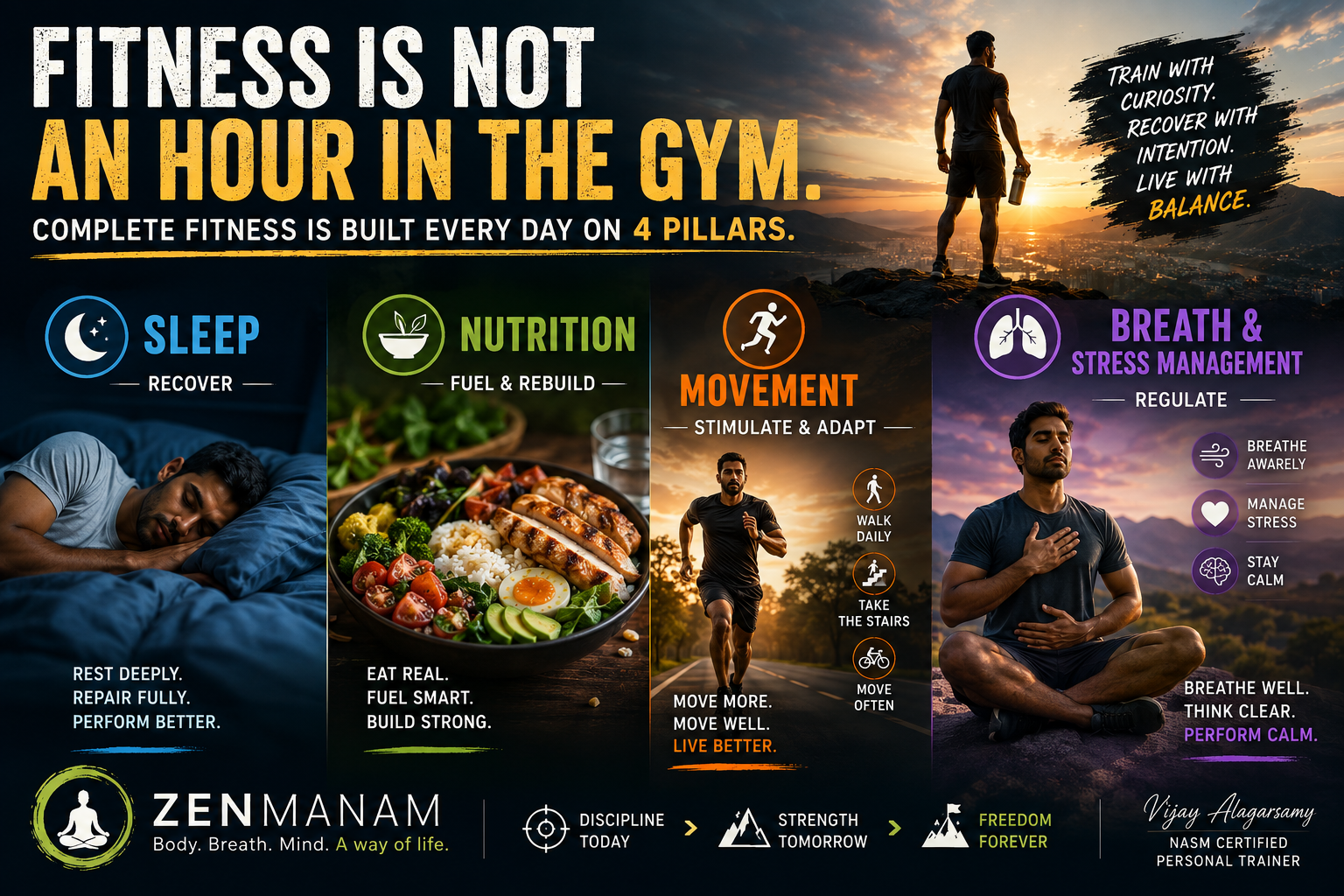
Complete fitness is built on four interconnected pillars: Sleep. Nutrition. Movement. Breath & Stress Management.
They are not four independent lifestyle tips. They are four parts of the same human system.
Pillar 1 — Sleep:
Training Ends. Adaptation Continues.
One particular cycling session changed how seriously I thought about sleep.
Normally when I begin cycling, my heart rate rises gradually. Depending on speed, terrain and intensity, I commonly see it move above 120 beats per minute after several kilometres.
One morning was noticeably different.
The previous night I had slept at around 11:30 PM and woken at approximately 4:30 AM.
About five hours of sleep.
I got onto the bicycle and started riding.
Within roughly the first kilometre, my heart rate was already around 120 bpm.
I remember looking at my watch and thinking:
Why is my heart working this hard already?
The effort didn't seem to justify the response.
That morning gave me a lesson no motivational fitness quote could have given me:
Yesterday's recovery enters today's workout with you.
What could have been happening?
One observation from one ride cannot establish cause and effect.
Heart rate can be influenced by temperature, hydration, caffeine, emotional stress, illness, accumulated training fatigue and many other factors.
But sleep is also closely connected to cardiovascular and autonomic regulation.
Our autonomic nervous system continuously helps regulate functions such as heart rate.
Its sympathetic component helps mobilise us for activity.
Parasympathetic — particularly vagal — activity contributes strongly to rest and recovery.
Insufficient sleep can disturb this balance and alter cardiovascular responses and perceived effort.
But sleep's role goes much further.
Training creates physiological stress.
Recovery is when the body responds to that stress.
Muscle tissue remodels.
Energy stores are restored.
The nervous system recovers.
Hormonal and metabolic processes continue.
Memory and motor learning are consolidated.
That is why I no longer think:Training happens when I exercise. Recovery happens when I do nothing.
I think:
Recovery is part of training.
For healthy adults, major sleep-medicine guidance generally recommends at least seven hours of sleep regularly, although individual needs vary. If I repeatedly train hard but sacrifice sleep, I am demanding adaptation while simultaneously reducing one of the body's most important opportunities to recover.
My first ZenManam principle
Sleep → Recover
Don't judge tomorrow's training only by what is written in the workout plan.
Ask:
How prepared is my body to perform that workout?
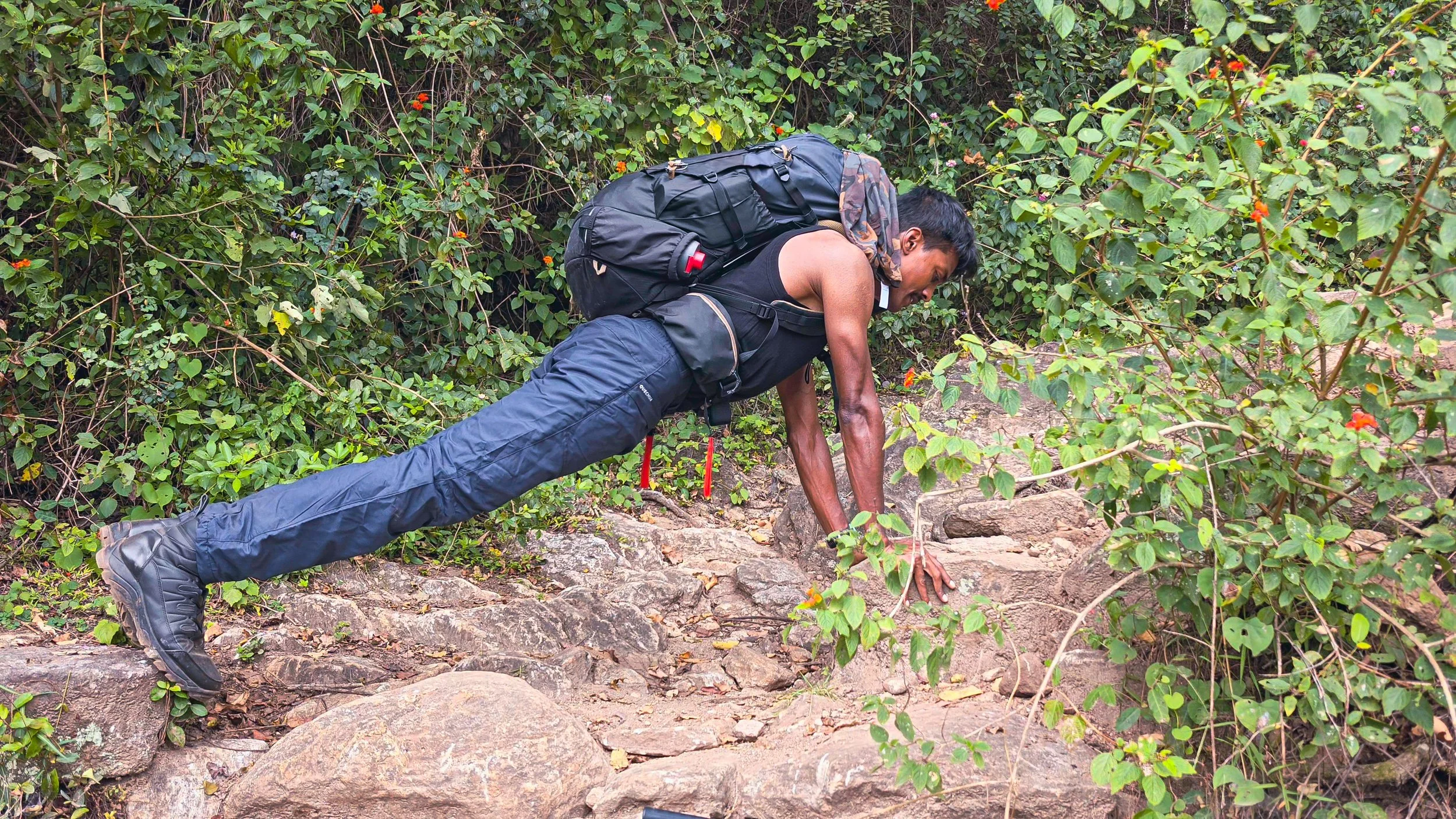
Pushups with 16kg rucks, after a 650m 4 km trek in Western Ghats
Pillar 2 — Nutrition:
Exercise Creates the Demand. Food Supplies the Material.
As my training volume increased, another problem appeared.
My routine could involve cycling, running, swimming, martial arts, strength training, mobility and flexibility across the week.
But my diet hadn't changed very much.
I was eating my usual South Indian food, including two or three boiled eggs most days.
Then I started noticing something at night.
The muscles I had trained that day sometimes felt mildly painful or uncomfortable when I went to bed.
Eventually I asked myself: Has my training load progressed faster than my nutrition?
I began consciously increasing protein-rich foods and paying more attention to recovery nutrition. I also experimented with consuming protein-rich food around an hour before sleeping.
The change I personally experienced was significant.
The night-time muscular discomfort reduced considerably, and my sleep felt much more peaceful. Was protein definitely the sole cause? I can't claim that. This was my personal observation, not a controlled experiment. But the physiology behind the broader idea is fascinating.
Your Muscle Is Constantly Rebuilding
Skeletal muscle is dynamic tissue. Proteins are continuously being broken down and synthesised. Training provides a stimulus for adaptation.
Dietary protein supplies amino acids, which provide building blocks for new proteins. Inside our muscles are proteins such as actin and myosin, fundamental to muscle contraction.
Exercise challenges this machinery.
Nutrition helps provide the materials needed to maintain and remodel it.
Research into pre-sleep protein intake has also shown that protein consumed before sleep can be digested and absorbed overnight and can increase overnight muscle-protein synthesis under certain conditions. A systematic review found evidence supporting approximately 20–40 g of pre-sleep casein in studied populations, particularly alongside resistance training. That doesn't mean everyone needs a protein shake before sleeping. And it certainly doesn't mean protein timing is more important than total daily nutrition.
The lesson is simpler:
If you increase the body's workload, you also need to think about the resources required for recovery.
My second ZenManam principle
Nutrition → Fuel & Rebuild
The Grilled Chicken That Changed How I Looked at Outside Food
Not every nutrition lesson came from sports.
One evening, because of an urgent situation, I ordered grilled chicken from a nearby restaurant. It tasted good. It was also heavily seasoned and rich in masala.
The following morning I noticed that my bowel movement looked noticeably different — stickier and differently coloured than usual. I cannot scientifically conclude that the restaurant meal caused that change. Stool consistency and colour can vary because of ingredients, fat content, pigments, gastrointestinal transit and many other factors.
But it made me think more carefully about something.
How much do I actually know about what went into my food?
Since then, I have increasingly preferred home-cooked food.
Not because:
Restaurant food = bad.
Or:
Masala = unhealthy.
That would simply create another food myth.
What home cooking gives me is visibility.
I generally know:
what ingredients went in, how much oil was used, how much salt was added, how it was cooked, and roughly what nutritional balance I am consuming.
For me, nutrition isn't about exotic superfoods. Sometimes it begins with simply knowing what is on your plate.
“Don't Eat the Yellow Part of the Egg”
Food myths become particularly interesting here. As we grow older, many of us start receiving unsolicited nutrition advice.
One I repeatedly encountered was: “Stop eating the yellow part of the egg. Cholesterol!”
I have also heard contradictory claims linking egg yolk and knee or joint health. When I once discussed this with an orthopaedic surgeon, his advice made me reconsider the habit of automatically discarding the yolk.
Science gives us a more nuanced answer. Egg white provides excellent high-quality protein. But the yolk contains much of an egg's choline, vitamins A, D and E, carotenoids, fats, phospholipids and several other micronutrients.
The yolk also contains cholesterol. Does that make it automatically unhealthy?
No.
The American Heart Association's guidance has moved away from judging cardiovascular nutrition through one isolated nutrient. Its dietary guidance emphasises the overall dietary pattern, and its scientific advisory notes that healthy people can include whole eggs within a healthy diet, with individual considerations for people with dyslipidaemia and other cardiovascular risks.
But we should be equally careful with the opposite claim.
Egg yolk does not magically prevent knee pain.
Joint health depends on far more than one food — including cartilage, bone, muscle strength, tendons, ligaments, previous injuries, body mass, loading, ageing and disease.
The lesson I took from this wasn't:
Eat yolks.
It was: Stop classifying entire foods as good or bad because someone isolated one nutrient.
Water Is Nutrition Too — And I Learned That by Falling Off My Bicycle
One of my strongest hydration lessons happened during fast cycling training.
I had left my water bottles in the car.
After riding for some time, I felt thirsty.
Instead of stopping, I convinced myself: I'll finish one more lap and drink afterwards.
I completed the lap. Finally, I decided to stop.
I unclipped my left foot from the pedal.
Naturally, I should then have shifted my weight towards the left.
Instead, I leaned right. My right shoe was still clipped in.
And...
down I went.
It sounds funny now.
But afterwards I wondered: Why did I make such a basic decision so poorly?
I cannot claim dehydration caused my fall.
But dehydration and heat strain can influence fatigue, perceived effort and cognitive performance. A meta-analysis examining dehydration and cognition found measurable impairments, particularly as body-mass loss from dehydration became larger.
When I got up, my right leg also began showing signs of cramping.
And that brought me to another fascinating area of physiology.
Sodium, Potassium and the Electrical Human Body
When we sweat, we don't lose only water.
Sweat contains electrolytes, especially sodium, along with smaller quantities of potassium and other minerals.
Why do sodium and potassium matter?
Because movement is partly an electrical event.
In simplified terms:
Sodium (Na⁺) is predominantly concentrated outside our cells.
Potassium (K⁺) is predominantly concentrated inside.
The sodium-potassium ATPase helps maintain these concentration gradients.
When a motor neuron activates a muscle fibre, changes in ion movement create an action potential.
That electrical signal travels along the muscle membrane and through structures called T-tubules.
It eventually promotes calcium release from the sarcoplasmic reticulum.
Calcium interacts with troponin and tropomyosin, enabling myosin to interact with actin.
And then: the muscle contracts.
So a single pedal stroke involves something extraordinary:
Brain → nerve → electrical signal → calcium → actin/myosin → force → movement.
What looks mechanical from outside is simultaneously electrical, chemical and mechanical inside.
“You Cramped Because You Didn't Drink Enough Water.”
Possibly. But not necessarily. This is another example of fitness advice becoming oversimplified.
Exercise-associated muscle cramps are multifactorial.
Fluid and electrolyte losses may contribute in some circumstances, particularly during prolonged exercise and heavy sweating. But neuromuscular fatigue and altered neuromuscular control are also important explanations.
So we shouldn't reduce every cramp to: “You need salt.”
Nor should endurance athletes conclude: “Drink as much water as possible.”
Because there is another extreme.
Consuming excessive hypotonic fluid during prolonged exercise can dilute blood sodium and contribute to exercise-associated hyponatraemia, which can become medically serious.
Hydration is therefore about balance, not maximum intake.
For shorter ordinary workouts, water and normal meals may be sufficient for many people.
For prolonged exercise, heavy sweating or hot conditions, fluid and electrolyte strategies may need to be more deliberate and individualised. And although ORS is extremely valuable in the medical treatment of dehydration, particularly gastrointestinal fluid loss, I would not treat ORS as a mandatory everyday sports drink.
The Runner Beside the Medical Tent
I witnessed how serious these situations can become during a Trackathon. A woman runner collapsed — fortunately, almost directly in front of the medical tent. She was immediately attended to. After completing another lap, I rested near the tent and noticed what was happening.
Both her legs appeared severely cramped, extending high towards the hip region. Even the medical and physiotherapy team's attempts to manipulate her legs appeared extremely painful.
From what I understood at the time, inadequate hydration was suspected. But without her medical assessment, I cannot know whether dehydration, electrolyte imbalance, heat stress, neuromuscular fatigue or another medical issue caused the episode.
That distinction matters.
Because: Anecdotes can teach us to ask questions. They shouldn't be used to diagnose people.
What I carried away from that incident was much simpler: Don't wait until the body is in crisis before thinking about hydration, nutrition and recovery.
Pillar 3 — Movement:
Your Body Doesn't Know You Have a Gym Membership
As a fitness trainer, I regularly receive a version of this enquiry: “I can spend 45–60 minutes in the gym every day. I want to reduce weight and become fit. Can you give me a programme?”
My answer is: Absolutely. That's a good beginning.
But then I want to ask another question.
What are you doing during the remaining 23 hours?
Imagine:
Wake up.
Sit during breakfast.
Ride or drive to work.
Sit for four hours.
Lunch.
Sit another four hours.
Drive home.
Take the elevator.
Then spend one intense hour in the gym.
That hour is unquestionably valuable.
But fitness cannot be reduced to that hour.
We Have Removed Movement From Life — Then Bought It Back
This contradiction fascinates me.
I see people use two-wheelers to travel 200 or 300 metres to a nearby school.
Nearby shop?
Take the bike.
Live on the second floor?
Wait for the elevator.
Going downstairs?
Still wait for the elevator.
And then...
Drive to a gym.
Get onto a treadmill.
Walk.
There is something wonderfully strange about modern fitness.
We have engineered movement out of everyday life and then created a separate appointment to put movement back into it.
WHO makes an important distinction here: all physical activity counts, including walking, cycling, work, household activity, sport and deliberate exercise. It also recommends adults accumulate roughly 150–300 minutes of moderate aerobic activity or 75–150 minutes of vigorous activity each week, alongside muscle-strengthening activity.
Sedentary behaviour is also considered separately from insufficient exercise. Long periods spent sitting, reclining or lying awake with very low energy expenditure constitute sedentary behaviour.
So I have gradually changed the question.
Instead of: “Did I exercise today?”
I prefer: “How much did I move today?”
The 300-Metre Fitness Opportunity
Imagine the school is 300 metres away.
I can take my two-wheeler.
Or I can walk with my child.
Physiologically, walking activates and coordinates muscles throughout the lower body.
The gluteus maximus contributes to hip extension.
The gluteus medius helps stabilise the pelvis.
The quadriceps contribute to knee control.
The gastrocnemius and soleus contribute to propulsion.
Our cardiovascular and respiratory systems respond to the increased demand.
But something else happens that my fitness watch cannot measure.
My child talks to me.
Maybe about school.
Maybe we notice a bird.
A cloud.
A flower.
A dog.
Maybe my child asks a question I wasn't expecting.
Maybe we laugh.
Suddenly those 300 metres become:
Movement + relationship + observation + memory.
And that matters to me.
Walking to the shop. Taking the stairs. Standing periodically during desk work. Playing with children. Carrying groceries. Gardening. Walking after a meal.
None of these replaces structured exercise. But structured exercise shouldn't replace them either.
Movement versus exercise
I think of the distinction this way:
Movement is the foundation.
Exercise is movement deliberately structured to produce a particular adaptation.
Walking to the shop is movement.
Intervals designed to improve running performance are training.
Carrying groceries is movement.
Progressively loading a squat is strength training.
Playing with children is movement.
Tai Chi can be structured movement training involving balance, control and coordination.
We need both.
My third ZenManam principle
Movement → Stimulate & Adapt
Fitness isn't somewhere we go for an hour.
It is something our body experiences throughout the day.
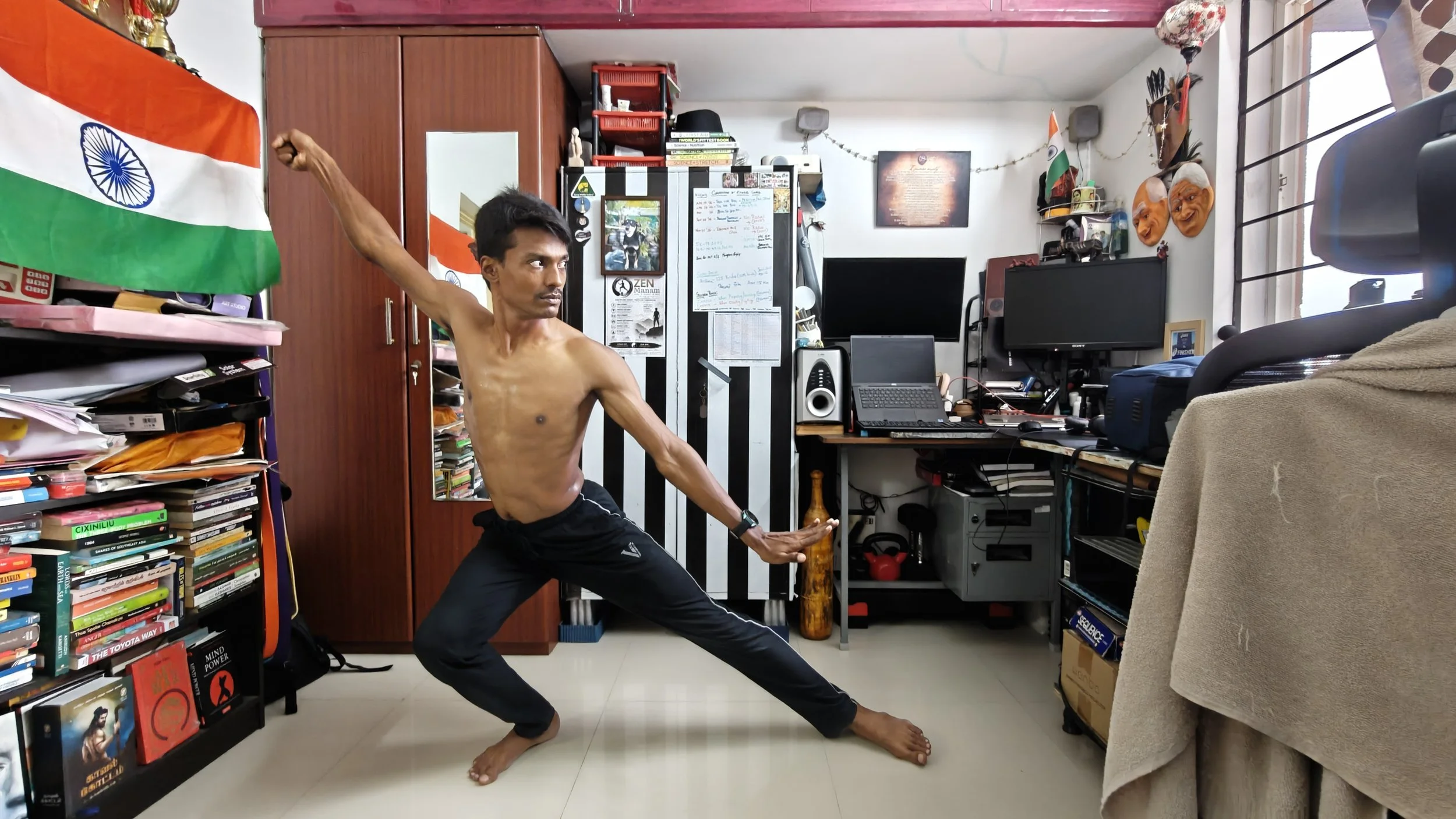
During a Tai Chi practice session
Pillar 4 — Breath & Stress Management:
The Upgrade I Didn't Know I Needed
Breathing was different. For most of my life, I never thought about it.
Why would I?
I had successfully been breathing since the day I was born. But as I became more involved with endurance sports, martial arts, strength training and Tai Chi, I began consciously observing my breath.
And that awareness transformed several aspects of my training.
Push-ups gave me one of the clearest examples.
What 30–50 Push-Ups Taught Me About Breathing
A push-up looks simple.
Lower yourself.
Push yourself up.
Repeat.
But consider what's happening.
The pectoralis major contributes substantially to shoulder movement.
The triceps brachii extends the elbow.
The anterior deltoid contributes at the shoulder.
The serratus anterior assists scapular control.
The trunk musculature and gluteals help maintain body position.
I began consciously coordinating breathing with the movement.
Going down:
Inhale.
Coming up during exertion:
Exhale.
Down.
Inhale.
Up.
Exhale.
Instead of holding my breath, rushing repetitions or gasping towards the end, I found a rhythm.
Gradually, my push-ups became slower, steadier and more controlled.
Depending on the session, I could perform roughly 30–50 continuous push-ups while maintaining rhythm.
Did breathing magically give me the strength to perform 50 push-ups?
Of course not.
Training, strength, muscular endurance, body mass, technique and fatigue all contributed.
But breathing helped me organise the effort.
And suddenly I understood:
Breathing isn't only something happening while I exercise. It can become part of how I exercise.
Breath Sits Between Automatic and Conscious Control
Breathing is extraordinary because we don't normally need to think about it.
Brainstem respiratory centres automatically regulate ventilation according to the body's needs. Yet we can also voluntarily influence breathing.
Faster.
Slower.
Deeper.
Shallower.
Longer exhalation.
Breathing synchronised with movement.
That places breath at a fascinating intersection between automatic physiology and conscious behaviour.
It also connects breathing with autonomic regulation.
Heart rate naturally varies somewhat with respiration — tending to accelerate during inspiration and decelerate during expiration — a phenomenon associated with respiratory sinus arrhythmia.
Slow voluntary breathing has been studied extensively. A systematic review and meta-analysis found increases in vagally mediated heart-rate variability during slow breathing, immediately after sessions and following repeated practice.
This doesn't mean:
“Take five deep breaths and stress disappears.”
Stress physiology is far more complicated.
But it means breath gives us an unusually accessible route through which we can influence physiological state.
Stress Is Not Only Something in Your Mind
We often associate stress with worry. But from the body's perspective, stressors come in many forms.
A difficult deadline. Poor sleep. A hard interval session. Heat. Illness. Emotional conflict. Under-fuelling. Excessive training. Even exercise itself is stress.
The difference is that well-designed exercise is controlled stress followed by adaptation.
Now imagine:
hard morning workout, poor breakfast, four hours sitting, work pressure, too much caffeine, another workout, late dinner, phone until midnight, five hours of sleep... and another hard workout tomorrow.
Each decision may look harmless in isolation.
Together, they create an entirely different physiological environment.
This is why I refuse to consider stress management the “soft” part of fitness.
Recovery is physiology.
My fourth ZenManam principle
Breath & Stress Management → Regulate
A Few Fitness Myths I No Longer Accept Without Question
My fitness journey has also taught me to become suspicious of sentences beginning with: “Everyone knows...”
Because fitness culture is full of half-truths.
“Sweating more means you're burning more fat.”
Sweat is primarily thermoregulation. A large immediate weight reduction after a sweaty workout is predominantly fluid loss, not kilograms of fat disappearing.
“I want to lose only belly fat. Give me ab exercises.”
Abdominal exercises strengthen abdominal muscles. They cannot instruct the body to selectively remove fat covering those muscles.
“If I'm not sore tomorrow, the workout didn't work.”
Soreness is not a reliable measurement of training effectiveness. Adaptation is.
“Lactic acid is why my muscles hurt two days later.”
Lactate doesn't simply remain trapped in muscles for days causing DOMS (Delayed Onset Muscle Soreness). It is rapidly metabolised and can serve as fuel and as a signalling molecule.
“Women shouldn't lift heavy because they'll become bulky.”
Meaningful muscular hypertrophy requires training stimulus, nutrition, genetics, hormonal factors and time. Strength training provides important muscular, skeletal and functional benefits for women.
“Creatine is basically a steroid.”
It isn't. Creatine is a naturally occurring compound involved in the phosphocreatine energy system that helps rapidly regenerate ATP during high-intensity activity.
“More exercise is always better.”
This may be the most dangerous myth for enthusiastic athletes.
Because: Training stimulus + recovery → adaptation.
More stress without adequate recovery is not automatically more fitness.
“Getting fitter means losing weight.”
Imagine someone whose: resting heart rate improves, strength increases, walking capacity improves, waist circumference decreases, sleep improves, cardiovascular endurance increases, and mobility improves... but whose scale weight barely changes.
Did they fail?
No.
Weight is a measurement. Fitness is a capacity.
The Four Pillars Are Really One System
This is ultimately what all these experiences taught me.
Sleep poorly tonight.
Tomorrow's training may feel different.
Train hard tomorrow.
Muscles require energy and amino acids to recover.
Exercise for hours in Chennai heat.
Fluid and electrolyte demands change.
Spend the entire day psychologically stressed.
The nervous system receives another load.
Sit for eight hours.
One hour of exercise doesn't make those eight hours cease to exist.
Then go to bed late.
And repeat.
We like separating health into categories because categories are easy to teach.
The human body doesn't operate that way.
The systems continuously interact.
That is why my complete-fitness model is deliberately simple:
SLEEP
Recover
Nervous-system recovery.
Muscular repair.
Cardiovascular regulation.
Metabolic and hormonal function.
NUTRITION
Fuel & Rebuild
Energy.
Protein.
Carbohydrates.
Fats.
Micronutrients.
Water.
Electrolytes.
MOVEMENT
Stimulate & Adapt
Cardiorespiratory fitness.
Strength.
Muscular endurance.
Mobility.
Flexibility.
Balance.
Coordination.
Everyday movement.
BREATH & STRESS MANAGEMENT
Regulate
Breathing mechanics.
Autonomic regulation.
Recovery.
Awareness.
Stress management.
My Body Has Become a Personal Laboratory — But Not a Scientific Study
There is one distinction I consider very important, particularly as a trainer.
I experiment on myself.
I observe.
I record.
I compare.
If my heart rate behaves differently after poor sleep, I notice it.
If changing nutrition appears to improve my recovery, I notice it.
If I perform better when coordinating breath and movement, I notice it.
But:
Personal experience is not scientific proof.
My experience gives me a question.
Science helps me investigate the possible answer.
That distinction protects us from one of the biggest problems in modern fitness culture.
Someone loses 10 kilograms doing something.
Therefore:
“Everyone should do this.”
Someone develops knee pain after running.
Therefore:
“Running destroys knees.”
Someone eats eggs every morning and remains healthy.
Therefore:
“Unlimited eggs are healthy for everybody.”
Human physiology doesn't work through Instagram testimonials.
Context matters: Age - Training history – Genetics - Medical conditions – Environment – Nutrition – Sleep – Stress – Dose – Intensity - Recovery.
That's why evidence and personal observation should complement each other — not compete.
Fitness Is Not a Six-Pack
We have reduced fitness to appearance for far too long.
A lean body can be fit.
A muscular body can be fit.
But appearance alone tells me very little about: cardiorespiratory capacity, sleep quality, mobility, muscular endurance, nutrition, balance, stress regulation, or long-term health.
For me, complete fitness means something broader.
It means waking up recovered.
Having energy to move.
Having muscles capable of producing and controlling force.
Having a cardiovascular system capable of supporting endurance.
Having joints capable of useful movement.
Being able to walk.
Run.
Carry.
Climb.
Squat.
Cycle.
Swim.
Play with your children.
Knowing when to push.
Knowing when to recover.
Recognising hunger.
Recognising thirst.
Recognising fatigue.
And sometimes recognising:
My body is telling me something. I should listen.
Fitness Happens in the Other 23 Hours
So when someone asks me:
“I have 45 minutes or one hour every day. Can you make me fit?”
My answer is:
I can certainly help you train during that hour.
But I also want to know what happens afterwards.
How are you sleeping?
What are you eating?
How much are you sitting?
Do you walk when walking is possible?
Do you take the stairs?
How are you recovering?
How do you breathe when effort increases?
What happens to your breathing when stress increases?
Because the body entering the gym for one hour is the same body that lived through the previous twenty-three.
And perhaps this is the biggest lesson my own fitness journey has taught me: Fitness isn't about how much exercise your body can survive.
It is about how well your body can move, fuel itself, recover and regulate itself — repeatedly, for a lifetime.
That is complete fitness to me. That is the philosophy behind my Fitness Training Academy - ZenManam.
Sleep. Nutrition. Movement. Breath.
Recover. Fuel. Adapt. Regulate.
Body. Breath. Mind. A way of life.
A Note to Readers
The experiences in this article are observations from my own training journey. They are not controlled experiments and should not be interpreted as medical diagnoses or proof of cause and effect.
Individual exercise, nutrition, hydration, electrolyte and recovery needs vary considerably. Symptoms such as collapse, confusion, chest pain, unusual breathlessness, persistent severe muscle cramps or loss of consciousness during exercise require appropriate medical assessment rather than self-treatment with water, salt, supplements or sports drinks.
Train with curiosity. Observe your body. And when the question becomes medical, ask a medical professional.
— Vijay
NASM Certified Personal Trainer
ZenManam — Body. Breath. Mind. A way of life.
Scientific References & Further Reading
Sleep
Watson NF, et al. Recommended Amount of Sleep for a Healthy Adult: A Joint Consensus Recommendation of the American Academy of Sleep Medicine and Sleep Research Society. Journal of Clinical Sleep Medicine. 2015.
Nutrition & Muscle Recovery
Reis CEG, et al. Effects of pre-sleep protein consumption on muscle-related outcomes — A systematic review. Journal of Science and Medicine in Sport. 2021.
Hydration & Cognitive Performance
Wittbrodt MT, Millard-Stafford M. Dehydration Impairs Cognitive Performance: A Meta-analysis. Medicine & Science in Sports & Exercise. 2018.
McCartney D, et al. The Effect of Fluid Intake Following Dehydration on Subsequent Athletic and Cognitive Performance: A Systematic Review and Meta-analysis. Sports Medicine Open. 2017.
Movement & Sedentary Behaviour
World Health Organization. WHO Guidelines on Physical Activity and Sedentary Behaviour. 2020. WHO recommends regular physical activity, limiting sedentary time and approximately 150–300 minutes of moderate aerobic activity or 75–150 minutes of vigorous activity weekly for adults.
Breathing & Autonomic Regulation
Laborde S, et al. Effects of voluntary slow breathing on heart rate and heart rate variability: A systematic review and meta-analysis. Neuroscience & Biobehavioral Reviews. 2022.
Eggs & Dietary Cholesterol
Carson JAS, et al. Dietary Cholesterol and Cardiovascular Risk: A Science Advisory from the American Heart Association. Circulation. 2020.
Lichtenstein AH, et al. 2026 Dietary Guidance to Improve Cardiovascular Health: A Scientific Statement from the American Heart Association. Circulation. 2026.