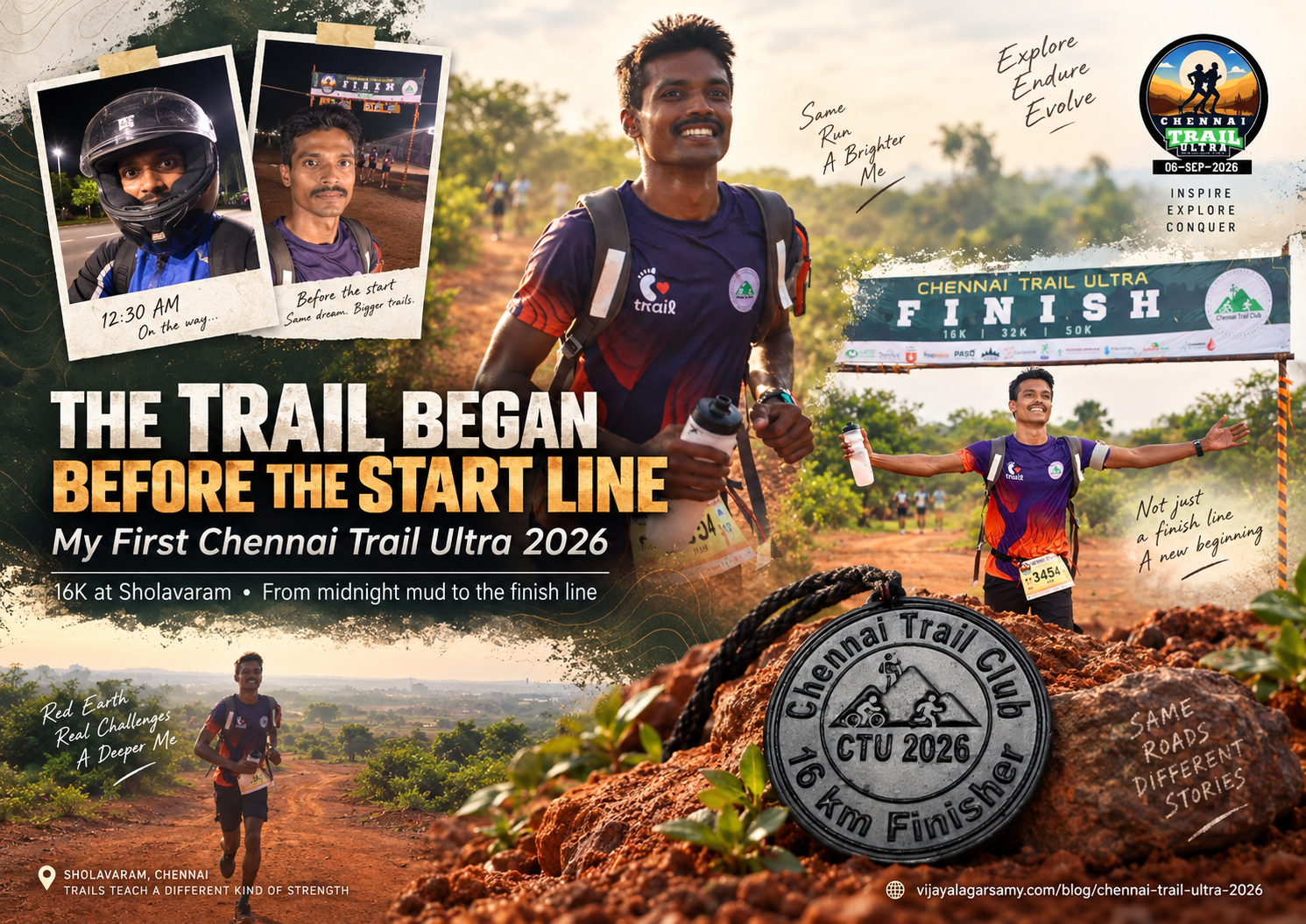
The Trail Began Before the Start Line
My First Chennai Trail Ultra — 16K Through Sholavaram, Sore Legs, Red Earth and One Unforgettable Night
The Race Before the Race
The moment I saw the notification for the Chennai Trail Ultra 2026, my mind had already registered for the event before my fingers even reached the registration page.
My first thought was: 32K. Let’s do it.
Then, thankfully, the slightly more sensible part of my brain joined the conversation.
This was going to be my first trail-running event. Instead of getting carried away by enthusiasm, I decided to begin with the 16K category, understand how my body responds to an off-road race, learn from the experience, and perhaps return next year ready for something longer.
So, 16K it was. And I was genuinely excited.
I have taken my car through plenty of off-road terrain. Mud, broken roads, loose gravel and questionable paths have always fascinated me when I am sitting comfortably behind a steering wheel.
This time, however, there would be no suspension, no tyres and no engine to take the beating.
My legs were going to be the suspension.
I wanted to know what it would feel like to run through such terrain—to let my body experience what my car usually does.
From the beginning, the Chennai Trail Club team made a great impression. Race communication, updates, instructions and bib collection were all organised smoothly.
And then came my first unexpected excitement at bib collection - The T-shirt. Yes, before discussing endurance, trails, heart rate or race strategy, I need to appreciate that T-shirt. I absolutely loved it. The design, colours and quality were excellent. Sometimes a good race T-shirt somehow makes you feel 5% more athletic even before you have run a kilometre.
Unfortunately, my body had a slightly different opinion about my readiness for the race.
The previous week had been heavy—workouts combined with tournament practice had left me with considerable soreness, particularly around the hip flexors of both legs and the popliteus area behind my right knee.
Suddenly, what had looked like an exciting trail race became a difficult decision.
Should I run at all?
There is always a thin line between pushing yourself and ignoring what your body is trying to tell you.
My body was voting for rest. My mind, however, was campaigning aggressively for participation. Eventually, the mind won—but with conditions.
One thing that gave me some confidence was my decision to stay at the accommodation arranged for runners near the race venue. That meant I wouldn't have to wake up ridiculously early, drive a long distance and arrive already tired before the race even began.
After collecting my bib the previous day, I returned home, had lunch and gave my body something it desperately needed: Rest.
A long afternoon nap worked surprisingly well. When I woke up in the evening, the soreness had eased considerably. The body felt better. Not perfect, but comfortable enough for the little voice inside my head to say:
"See? I told you we could run."
I had some tea, packed everything required for the race and the overnight stay, and prepared to leave.
Around 9 PM, I called one of the venue volunteers, Velmurugan, and asked whether it would be alright if I reached the location around 11 PM.
His response was simple and reassuring. Absolutely fine.
Instead of taking my car, I decided to ride my motorcycle. Before leaving, I checked the route on Google Maps. And, as always, Google Maps had an idea.
A shortcut.
There is something wonderfully optimistic about the word shortcut on Google Maps. It shows you a thin blue line and says: "This will save you seven minutes."
What it doesn't say is: "You may need courage, off-road tyres and possibly divine intervention."
The journey from Kelambakkam to Vandalur, and then through the Outer Ring Road towards Pattabiram, went perfectly well.
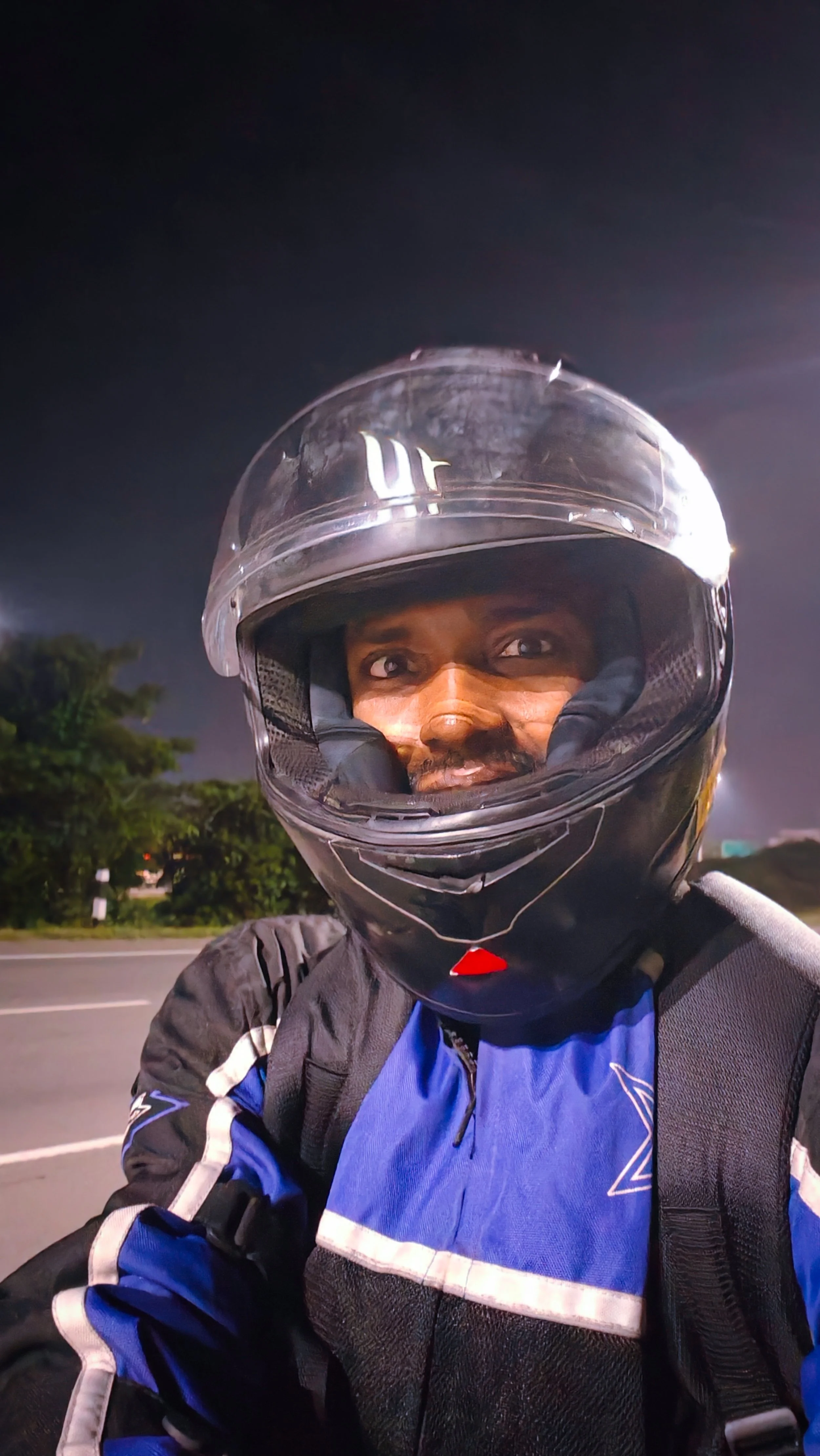
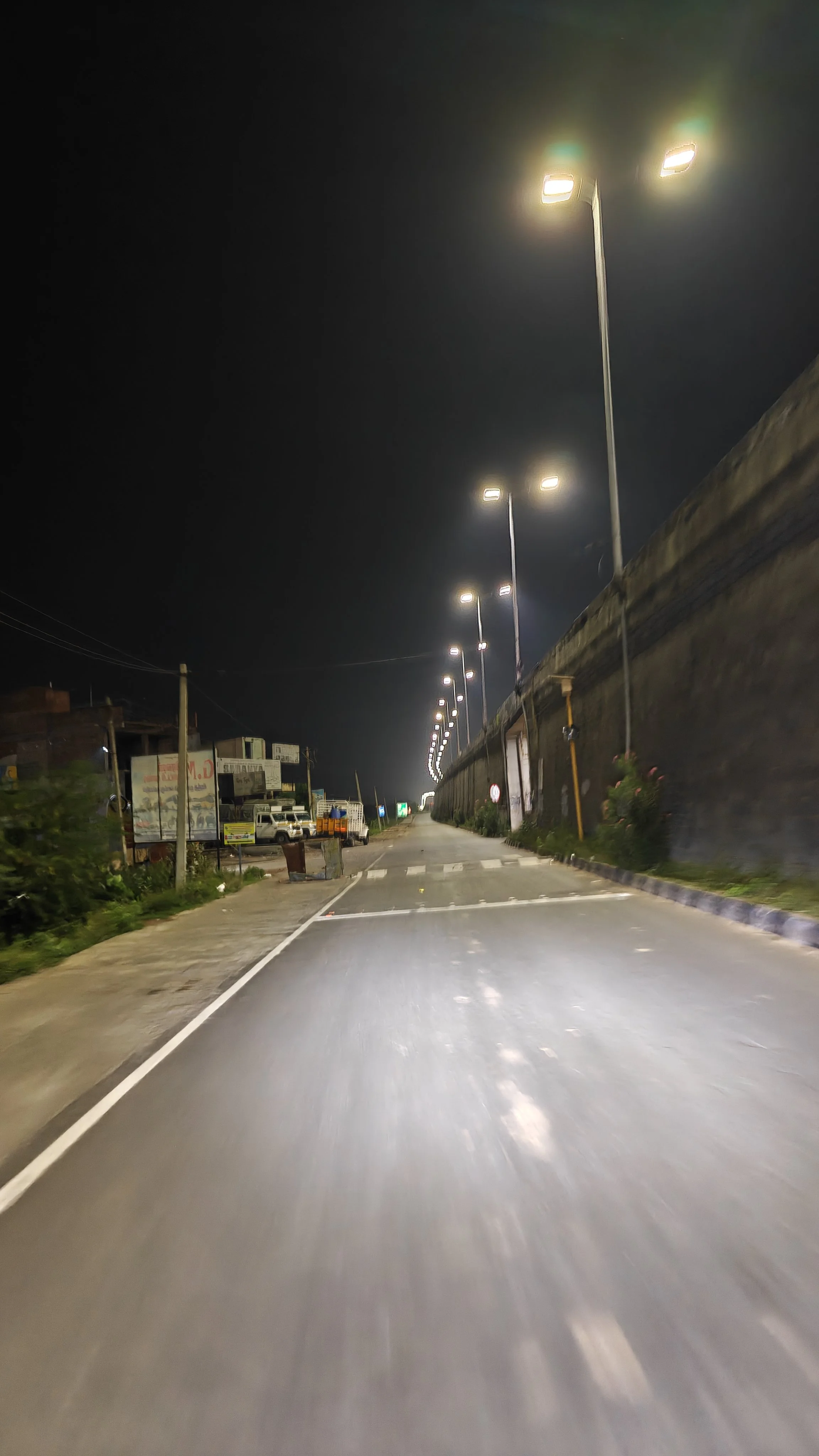
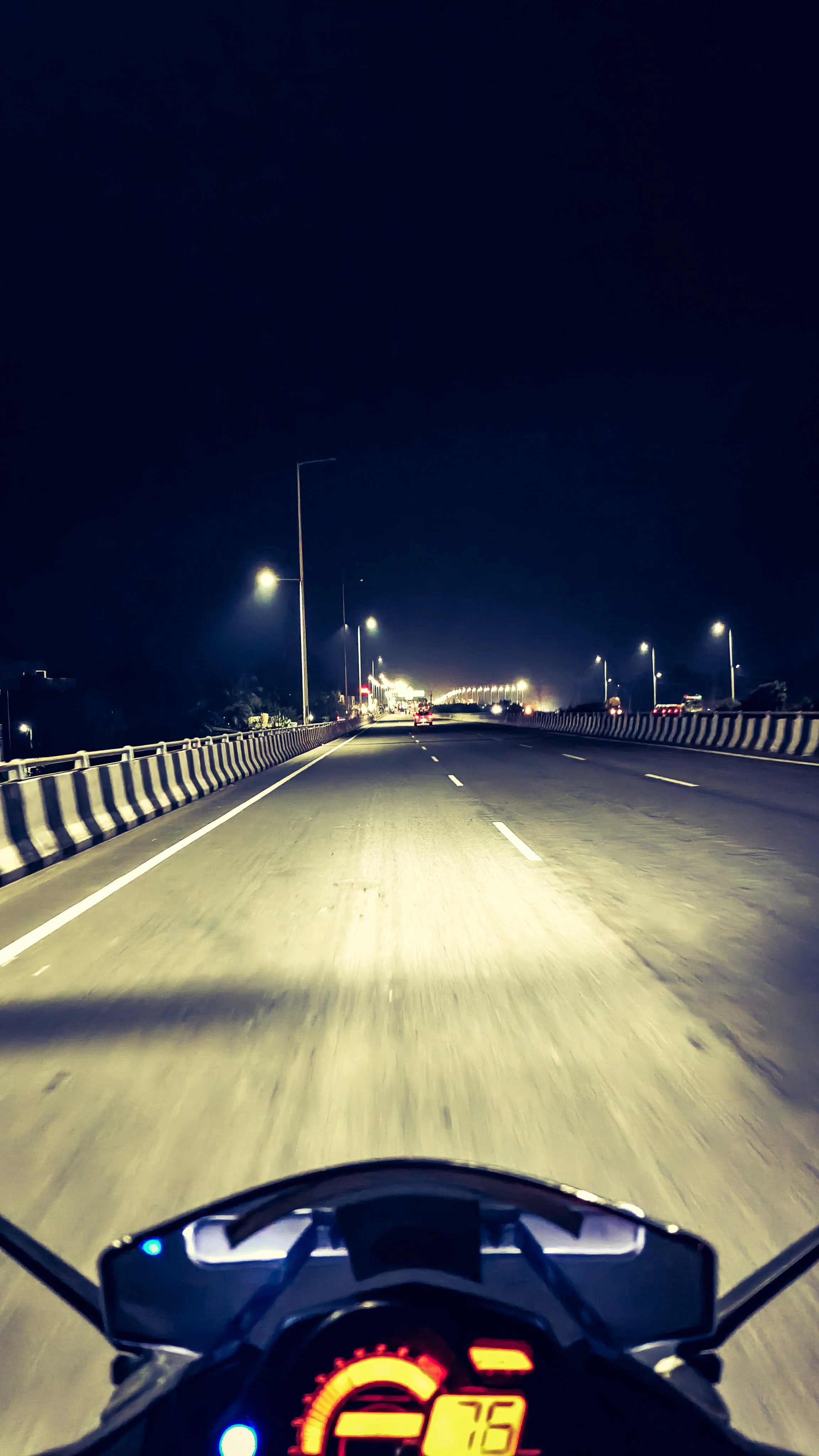
After Pattabiram, Google suggested the shorter route. I looked at it and thought perhaps it would be a peaceful village road.
Why not? So I followed it.
Around 10:30 PM, I crossed the Thiruvallur highway and entered another stretch of village roads.
Still good.
Then came a turn near a village called Singilikuppam.
The road suddenly became muddy.
I paused for a moment.
But I looked at my motorcycle, looked at its wide all-terrain tyres, remembered the places I had ridden before and thought: We can handle this.
Confidence is a beautiful thing. Until the mud becomes deeper.
A few hundred metres later, my thoughts changed from,
"Nice little off-road ride…"
to,
"Okay… when exactly does this road end?"
Google Maps kept cheerfully telling me that I was only about 15 minutes away from Dr. Ambedkar Ground.
The muddy stretch itself seemed determined to consume those entire fifteen minutes. Slowly, carefully and with considerably less confidence than when I entered it, I finally crossed the mud and reached a proper tar road.
Uff!!! Relief.
Beautiful, wonderful tar road. At that moment, asphalt felt like luxury. I continued happily.
For a while.
Then came another stretch where thick juliflora bushes had grown so heavily that they seemed to occupy nearly seventy percent of the road.
During daylight, perhaps it would have looked like vegetation.
At nearly 11 PM, under motorcycle headlights, it looked slightly more like the entrance to a horror movie.
I continued through it. Then I passed Old Erumaivettipalayam. Even in the middle of this midnight adventure, the name managed to make me smile.
By then, I was imagining that once I reached Dr. Ambedkar Ground, I could simply park the motorcycle, find the accommodation and finally lie down.
I reached the ground.
Parked my motorcycle.
And discovered one small detail.
The accommodation wasn't there.
I asked one of the volunteers, Venkata Gautam, about it.
Despite the late hour and volunteers obviously having plenty of work ahead of the race, he patiently explained where the school accommodation was located. He asked for my WhatsApp number, shared the location with me and, importantly, also explained the directions verbally so that I wouldn't end up trusting another adventurous Google shortcut.
I thanked him and started riding towards the school. By then, it was already becoming clear to me: I had registered for a 16K trail run the next morning.
But Google Maps had apparently decided that my trail experience should begin the night before. And technically…
I hadn't even reached the starting line yet.
A Classroom, a Ceiling Fan and a Few Hours of Sleep
I finally reached the school that had been arranged as accommodation for the runners. At that point, all I wanted was a safe place to park my motorcycle, a little space on the floor and a few hours of sleep. Even the first of those turned out to require some thinking.
I parked the motorcycle near the entrance, but immediately noticed that the ground was wet and soft. It didn't look strong enough to trust with the side stand for the entire night.
After surviving Google's midnight mud-trail experiment, I certainly wasn't going to wake up and find my motorcycle peacefully sleeping on its side.
So I scanned the area. Near a tree, I noticed a small patch of gravel.
Perfect.
I pushed the motorcycle over, positioned it carefully and made sure it was stable. One problem solved.
Now came the more important question: Where was I going to sleep?
I opened the school gate and walked inside. To my right, on the ground floor, I noticed a classroom with several people already sleeping. I switched on my mobile torch and quietly looked around for any available space, trying my best not to disturb anyone.
Apparently, my stealth skills weren't quite good enough.
Someone woke up.
He looked at me and asked what I was searching for.
“Just checking if there is some space to sleep.”
He looked around and gave me the verdict.
No space. Full.
Alright then.
I came back out and started walking towards the first floor. While climbing the stairs, I noticed a table on the verandah. I looked at it for a second and immediately developed Plan B.
"If there's no space upstairs, this is where I'm sleeping."
At close to midnight, standards become wonderfully flexible. Fortunately, Plan B wasn't required.
The room upstairs had space. Not luxury-suite space, obviously.
But not the kind of space where you need permission from the person next to you before turning over either.
A perfectly respectable patch of classroom floor. I kept my helmet and shoes near the entrance, placed my bags beside me and settled down.
Then I discovered another small blessing. The ceiling fan breeze was reaching my spot. At that moment, I genuinely felt lucky. When you are lying on a classroom floor before an ultra, happiness becomes surprisingly simple:
A little space.
A fan.
And nobody stepping on you.
I closed my eyes and went to sleep.
When the Ultra Runners Wake Up
Sometime around 3 AM, the room slowly began coming alive.
People were waking up, packing their things and preparing to report for the 50K and 32K races.
My alarm was set for 4 AM, so I had absolutely no intention of joining civilisation yet.
There were bags being zipped.
People moving around.
Quiet conversations.
Footsteps.
I ignored all of it.
Sleep was the priority.
And somehow, I managed.
Until someone switched on the tube light.
Boom.
My sleep disappeared instantly.
There are few things more powerful than a classroom tube light hitting your face at 3-something in the morning.
I sat up on one of the classroom benches.
Instead of immediately rushing around, I stayed quiet for a while and began doing my breathing exercises.
Slow breathing.
Calming the mind.
Settling the body.
Outside, runners were preparing for kilometres of trails.
Inside, I was simply sitting on a school bench, breathing.
It became one of those small moments I remember from the event, not dramatic, not exciting, but peaceful.
By around 4:15 AM, most of the long-distance runners had left. Only three of us remained. Another runner, who had also woken up, looked at me and asked, “Can I switch off the light?”
Probably the easiest question anyone asked me that morning. “Please do.”
The room became dark again. I lay down and tried to steal another twenty minutes of sleep.
Five minutes later, I realised something. This wasn't happening.
My brain had already moved from sleep mode to race mode.
So I gave up negotiating with it.
I got up, freshened myself, packed my belongings, put on my running shoes and prepared to leave.
I walked back towards the parking area, checked my motorcycle, collected my things and headed towards Dr. Ambedkar Ground.
This time, thankfully, without Google's adventure route.
Slowly, It Started Feeling Like Race Morning
I reached the ground, handed over my bag at the baggage counter and finally began warming up. The atmosphere had completely changed from what I had seen the previous night.
The darkness remained.
But now there was energy everywhere.
Runners warming up.
Volunteers moving around.
Announcements: Coffee. Bananas. Bread and jam.
Wait.
Coffee, bananas, bread and jam?
Now we were talking.
The food arrangements were genuinely excellent.
I had some black coffee, banana and bread with jam, and what impressed me even more was that the volunteers weren't simply keeping the food there, they were actively encouraging runners to eat adequately before starting.
That little bit of care matters.
Especially when hundreds of people are preparing to run different distances through unfamiliar terrain.
I personally enjoyed the arrangements a lot.
There was something very pleasant about standing there before sunrise, sipping black coffee and talking with some of the older runners.
Different ages.
Different distances.
Different reasons for being there.
But for that morning, everyone belonged to the same little community.
One by one, the longer-distance categories had already left. Then came another announcement. The last batch of 32K runners was called. They moved towards their start.
And suddenly, the ground felt different again. Most of the long-distance runners were gone.
Now, the people remaining around me were mostly waiting for one thing. The 16K flag-off.
My category.
Until that moment, the entire experience had been about getting there.
Reporting.
Sore muscles.
The decision whether to run.
The midnight motorcycle journey.
Mud roads.
Juliflora.
A classroom floor.
Interrupted sleep.
Black coffee.
But now there was nowhere else to travel.
No more preparation.
No more decisions.
The trail was waiting.
And finally…
so was I.
When the Trail Finally Began
The registrations for the 16K category were quite high, so the organisers had planned a staggered start to avoid congestion on the trail.
It made complete sense.
For me, though, there was another reason to choose carefully.
The Chennai weather.
Heat and humidity are not just matters of comfort when running. They directly influence the way the body responds—heart rate, hydration, perceived effort and overall fatigue.
And I knew what would happen once the sun came up properly.
So when runners were asked to organise themselves into cohorts, I quietly made my way into the first batch.
If I had to run 16 kilometres, I preferred doing as much of it as possible before the Chennai sun decided to join the race.
At the starting area, the atmosphere was wonderful.
There were a few basic stretches.
Some excited conversations.
Plenty of smiles.
And, of course, the enthusiastic shouting that somehow happens naturally when a group of runners is standing behind a start line before sunrise. The organising team once again gave us clear instructions.
They explained the trail markings, ribbons, hydration points, route guidance, safety precautions and the basic dos and don'ts of running through the terrain.
Everything was communicated neatly. Then, at around 5:45 AM, the first cohort was flagged off.
And finally… my first trail race had begun.
The 1 Hour 30 Minutes Goal
I had come into the race with a simple target:
Finish the 16K in 1:30:00.
Not because I wanted to fight for a podium.
Not because somebody else had given me that number.
It was simply the benchmark I had set for myself.
So from the beginning, I tried not to get carried away by the excitement of the start.
Trail running isn't the place to blindly chase your normal road pace.
The surface changes.
Your foot placement matters.
The effort changes with every section of terrain.
So I settled into a comfortable but purposeful rhythm.
No unnecessary sprinting.
No chasing every runner who passed.
Just finding my pace and letting my body settle into the trail.
And slowly, I began to enjoy it.
After a few kilometres, I reached the Sholavaram reservoir side, and this was where I really began to understand what a trail run feels like.
Looking at the route on a map is one thing.
Running through it is completely different.
The trail kept changing its personality.
At one point I was running on a fairly wide red-earth track. A little later, the surface became loose gravel. Then came narrow trails cutting through bushes and vegetation. There were patches of grass, uneven ground, little dips, small climbs and places where water had collected beside or across the trail.
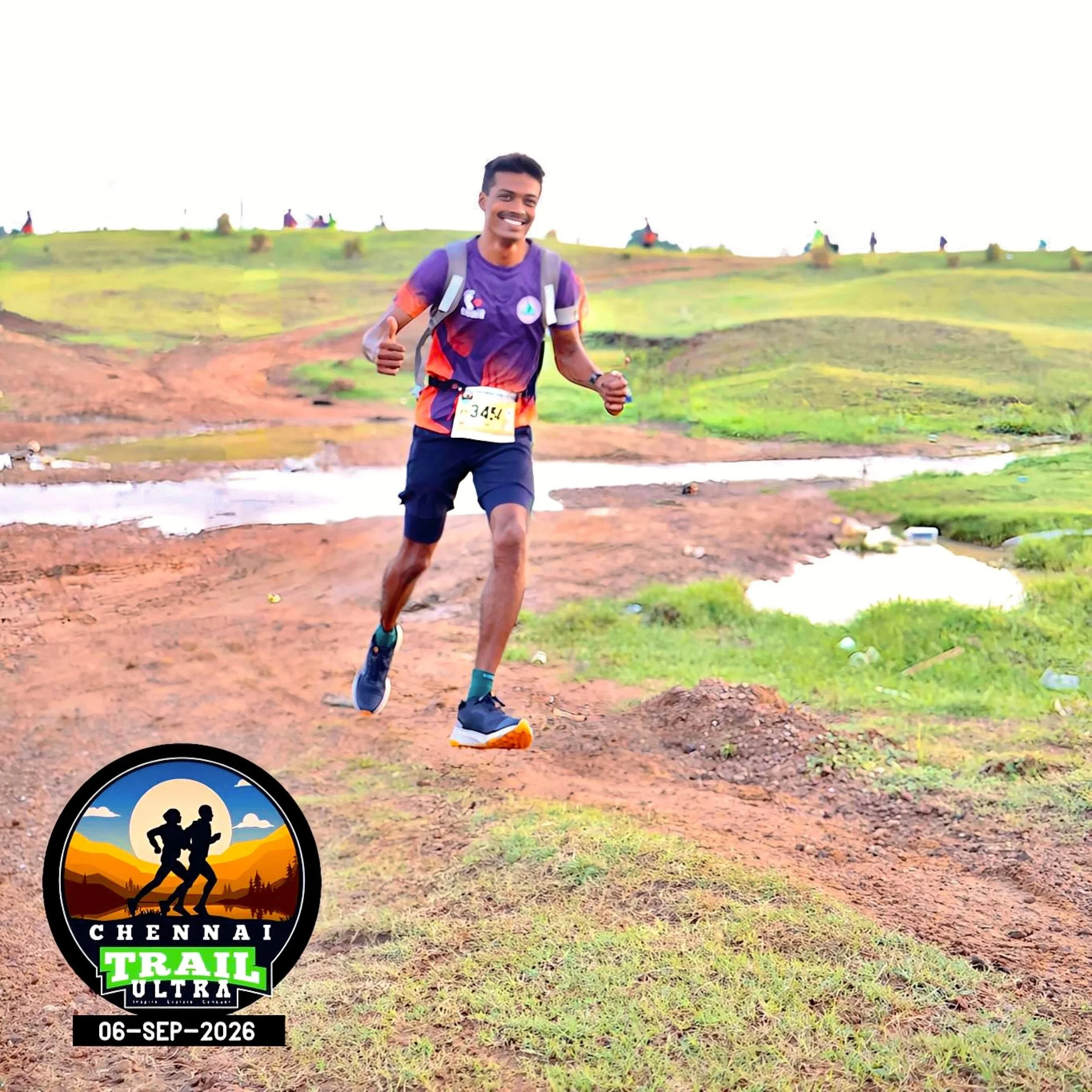
Happy Me
Nothing was extremely steep or mountainous.
But that was exactly what made the terrain interesting.
It wasn't a trail where you could simply lock yourself into one rhythm and keep staring at your watch.
Every few hundred metres, the ground asked a different question.
"Where are you placing your next foot?"
"Can you maintain the same pace here?"
"Should you shorten the stride?"
"Is that firm ground… or is your shoe about to discover something softer?" 😄
On the road, I can usually settle into a cadence and allow the body to repeat the same movement.
Here, the brain had to participate too.
I was constantly reading the surface.
Firm red soil — run normally.
Loose gravel — stay balanced.
Uneven ground — shorten the stride.
A small incline — control the effort.
A descent — don't get overexcited.
A wet patch — choose the landing carefully.
And then there were stretches where the trail opened beautifully beside the reservoir. The water on one side, shrubs and palm trees around, reddish earth beneath the feet and the early-morning light slowly spreading across the landscape.
For a few moments, I almost forgot that I was trying to finish within 1 hour 30 minutes.
This was the kind of running I had come here to experience.
I have taken my car through plenty of off-road terrain, and normally I think about ground clearance, tyre grip, suspension and traction.
That morning, there was no machine between the terrain and me.
My ankles were the suspension.
My feet were the tyres.
My core was the stability control.
And my brain was the traction-management system.
Fortunately, there was no dashboard warning light. 😄
There were also sections where the terrain rolled gently up and down. They may not look dramatic in photographs, but when you are maintaining a running pace, even a small rise changes the load on the legs.
That was another thing I began appreciating about trail running.
Carrying My Own Insurance
The organisers had informed us that there would be hydration points along the route.
But I have one habit during endurance activities: I prefer carrying some of my own hydration and nutrition.
Water and energy bars add a little weight, yes.
But knowing that I have something available when my body asks for it gives me more confidence than saving those few grams. During endurance events, I don't like waiting until I am thirsty, hungry or drained before thinking about hydration and energy.
So I carried what I thought I might need and kept moving.
16 kms on a predictable road and 16 kms over changing soil, gravel, grass, small inclines and uneven trails are two very different conversations with the body.
Near the Sholavaram Dam trail entry, there was a hydration point. I stopped briefly, had some water and continued.
And throughout this section, one thing made the experience much easier—the route markings.
The ribbons were clearly visible at junctions and along the trail, so I could concentrate on running rather than repeatedly wondering whether I was still following the race route.
Because on a trail like this, one wrong turn could easily change:
“My first 16K trail race”
into
“My unexpected 21K exploration of Sholavaram.” 😄
The Chennai Trail Club team had done that part very well. I kept moving.
The sun was slowly climbing higher now, and the landscape that had looked soft and beautiful under the early-morning light was beginning to remind us that this was still Chennai.
The temperature was rising.
The body was warming.
But I was enjoying myself.
This was no longer simply about reaching 16 kilometres.
I was learning how my body responded when the surface beneath me kept changing.
Then, Around 11K, My Body Spoke
The first ten kilometres went reasonably well.
I was running steadily and still thinking about my 1:30 target.
Then, sometime after the 11th kilometre, I felt it.
A slight discomfort behind my right knee—the same popliteus area that had already been bothering me before the race.
Nothing dramatic.
No sudden injury.
But enough for the body to send a very clear message: Be careful.
This is where race excitement can easily override judgment.
Part of the mind says: "Just keep running. Don't lose time."
But the more sensible question is: "Is saving two minutes worth turning a manageable discomfort into an injury?"
For me, the answer was no.
I had some ORS water and decided to walk for about two minutes.
Let the muscle settle.
Let the body reset.
Forget the watch for a moment.
After that short walk, I began running again. The target was still somewhere in my mind. But now there was another goal sitting above it: Finish strong without doing something stupid.
The Sound of the Finish
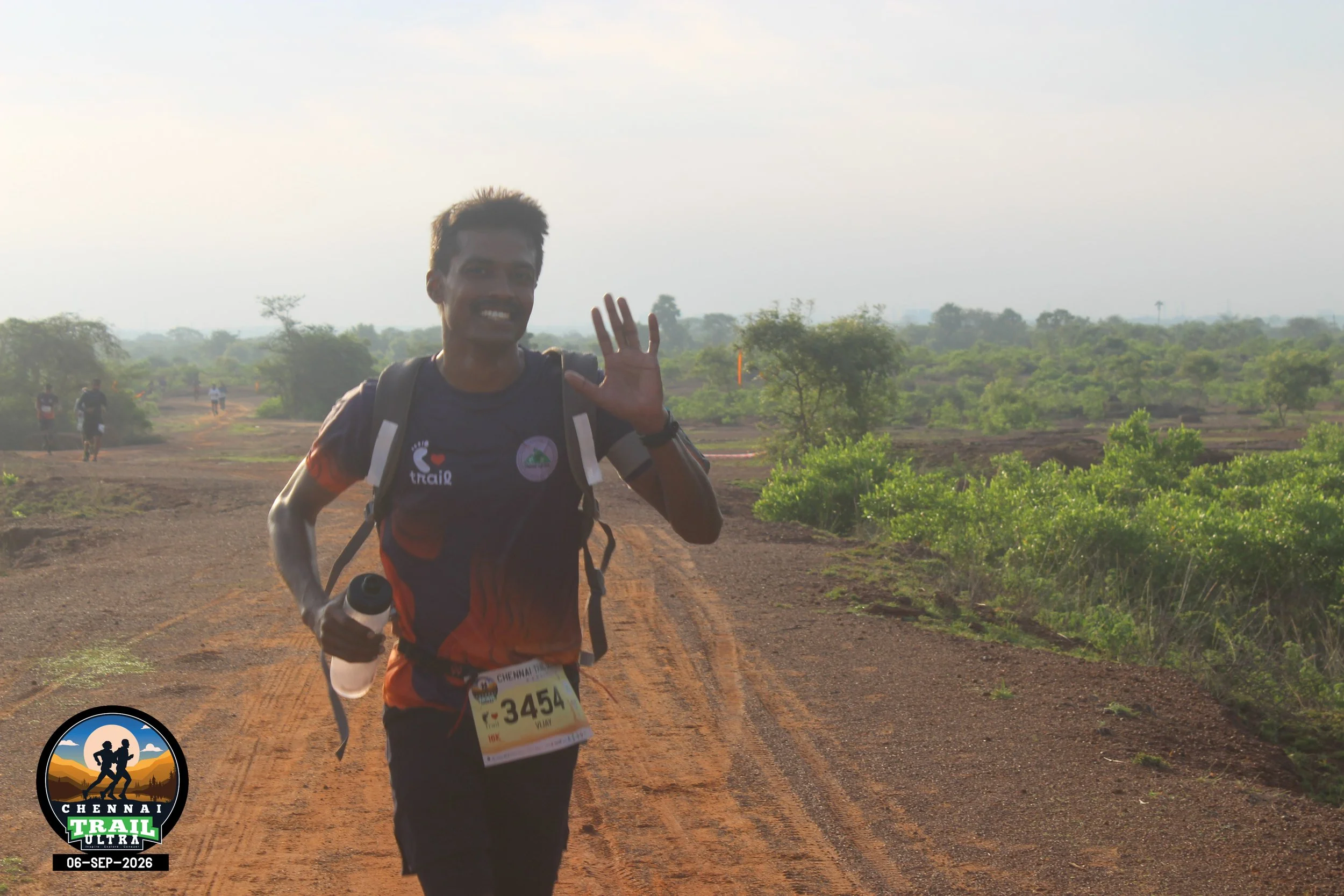
Somewhere around the 13th kilometre, I heard something in the distance.
At first it was faint. Then clearer. Microphone announcements.
And the unmistakable rhythm of parai melam. That sound did something immediately.
You don't need a GPS watch to tell you what it means. The finish line is somewhere close.
After kilometres of trail, hearing those sounds from the event area gave me an instant lift.
The legs may have been tired, the muscle may have been complaining. But the mind suddenly became much lighter.
"Okay. We're nearly there."
I kept running.
Then came a slight incline. And almost immediately, the discomfort behind my knee returned. Again, the body asked for attention.
So once more, I walked.
Another couple of minutes.
Of course, somewhere deep inside, the 1:30 target was watching all of this happen and probably crying quietly.
But there was no point forcing the issue.
After those two minutes, I made one decision: That's enough walking.
From here, unless the pain became genuinely concerning, I was running to the finish.
So I started again.
One step.
Then another.
And slowly, the sound of the finish line became louder.
Thanikaatu Raaja
As I approached the finishing stretch, I looked ahead. Nobody immediately in front of me.
I looked back. Nobody immediately behind me either.
For a few seconds, I had the entire finishing path to myself. Full thanikaatu raaja feeling. 😄
After spending much of the race thinking about pace, hydration, terrain and my complaining popliteus, suddenly there was space to relax.
So naturally…
I decided to enjoy the finish.
No dramatic sprint.
No collapsing across the timing mat.
I gave the photographers a few relaxed finish-line poses and ran through with a smile.
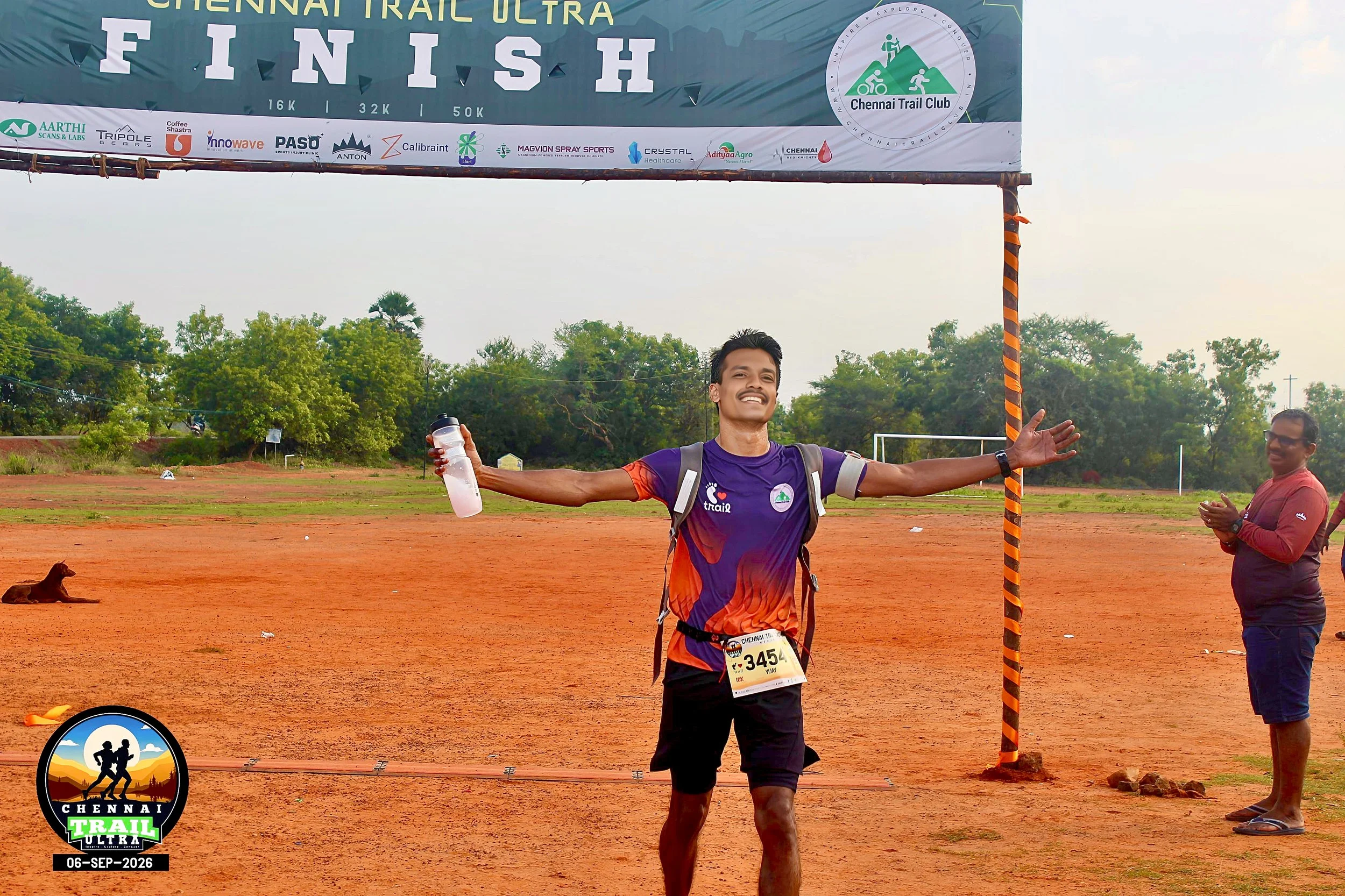
Calming Thanikaatu Raja ‘Finisher’ pose
The MyRace Timings eventually told the story: 16K trail run — 1:34:48.
The target had been 1:30:00. I missed it by a little over five minutes. Would I have liked that sub-1:30? Absolutely.
But standing there after my first trail race, after starting the previous day with sore hip flexors and discomfort behind my knee—I wasn't disappointed.
Not even slightly.
Because sometimes the real achievement isn't hitting the number you wrote down before the race.
It is knowing when to chase the number and when to respect the body carrying you towards it.
A Medal From Little Hands
As I crossed the line, a child came forward and placed the medal around me.
For some reason, I really liked that moment. After all the planning, training, discomfort and kilometres, the race ended with such a simple gesture.
A child.
A medal.
A smile.
And just like that, my first trail race was complete. I had some ORS water.
One of the volunteers kindly suggested that I could meet the physio team for recovery.
I told them I was okay.
Instead, I moved to one side and spent around 15 minutes doing my own cool-down and recovery routine, allowing the body to gradually settle rather than simply stopping after the finish.
And then came perhaps the most important stage of the entire endurance event.
Breakfast.
Now THIS Was Recovery
I walked into the breakfast area. And suddenly the 16 kilometres felt completely justified. There was:
Pongal.
Idli.
Vada.
Idiyappam with kurma.
Sambar.
Three chutneys.
Kesari.
I looked at the spread and thought:
"Okay… maybe I should have registered for 32K." 😄
The food was genuinely delicious.
Warm food after a long run has a different emotional value altogether.
Your watch may talk about calories. Your body may talk about glycogen. Sports science may talk about carbohydrate replenishment.
But after a trail run, the brain has a much simpler interpretation: Pongal. Vada. Kesari. Happiness.
I ate well.
And sitting there with breakfast after finishing my first trail race, the previous twelve hours suddenly played back in my head.
The sore muscles.
The decision whether to participate.
The midnight motorcycle ride.
The muddy Google Maps shortcut.
The school classroom floor.
The ceiling fan.
The 3 AM tube light.
Black coffee before sunrise.
The flag-off.
Sholavaram.
The trail.
The pain after 11K.
The parai sound in the distance.
And finally, that little child placing a medal around my neck.
I had come to Sholavaram wondering how my body would respond to off-road running.
By breakfast… I already knew I wanted to do it again.
One Final Trail I Didn't Want 😄
After the cool-down and after giving my body the very important recovery treatment of pongal, idli, vada, idiyappam, kurma and kesari, I finally headed towards the baggage counter.
I collected my bags, changed out of my running shoes and got ready for the ride home.
Running mode: OFF.
Motorcycle mode: ON.
I wore my safety jacket, walked back towards the parking area and found my motorcycle exactly where I had carefully parked it.
Helmet on.
Bags secured.
Engine started.
Then came one final decision. I opened Google Maps. And this time, there was absolutely no discussion. No shortcuts.
Google could save its adventurous village-road suggestions for somebody else. 😄
The previous night, I had arrived in Sholavaram through mud, darkness, narrow roads and juliflora bushes because I trusted a route that promised to save a few minutes.
That morning, after completing 16 kilometres on my feet, I had no interest whatsoever in adding another unofficial trail event on two wheels.
Highways, please.
I selected the proper route and started riding home. There was something deeply satisfying about that return journey.
The race was over.
The nervousness I had carried the previous afternoon about whether my body would even allow me to participate was gone. The discomfort had been managed.
The medal was in my bag.
My stomach was happily processing what felt like an entire Tamil Nadu breakfast menu. And somewhere behind me was Sholavaram—a place that had given me my first trail-running experience.
I rode back through the highways, tired but comfortable. And most importantly, safe and strong.
When I finally reached home, I realised that my Chennai Trail Ultra story had actually contained two trail adventures.
One was officially organised by the Chennai Trail Club.
The other was unofficially organised by Google Maps the previous night.
Fortunately, I completed both. 😄 But only one of them gave me a medal.